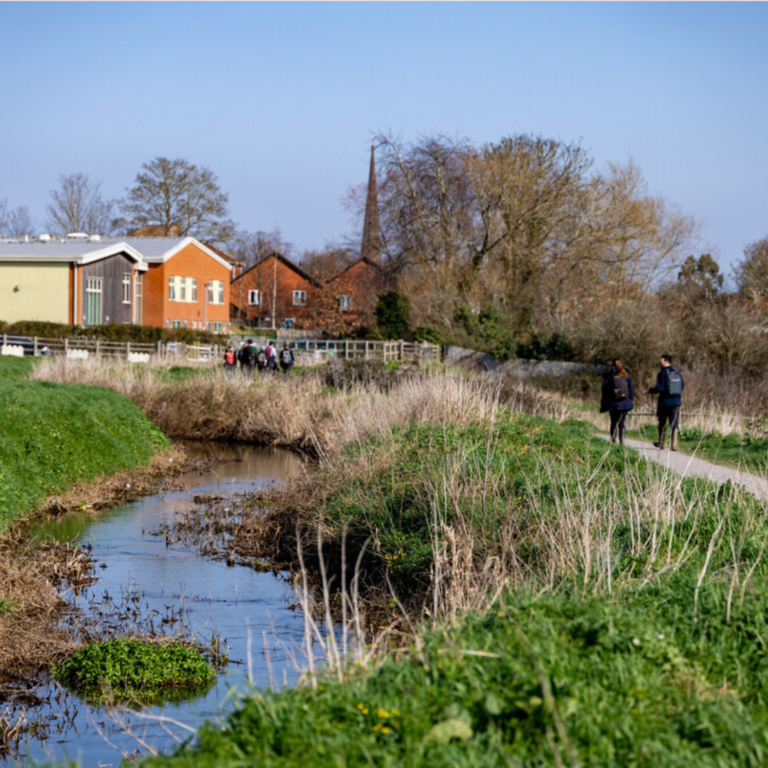
Bristol sets sights on becoming UK’s first Wetland City
Bristol Climate & Nature Partnership are among the local partners supporting Bristol on a journey to become the UK’s first Wetland City in an ambitious collaboration led by WWT, the wetland charity, and Aviva, the UK’s largest diversified insurer. The programme will see over 200 wetland projects in Bristol to help combat the impacts of climate breakdown.
A Wetland City puts nature at the heart of community life. By creating new, and restoring existing, wetlands and integrating these unique habitats into city infrastructure, Wetland Cities work with nature to make neighbourhoods more resilient to the impacts of extreme weather and climate breakdown.
Urban communities are home to over 80% of the UK’s population and face unique challenges. According to the European Commission Joint Research Centre, city centres are up to 6°c hotter than surrounding areas during heatwaves. Meanwhile, neighbourhoods are flooding at an alarming rate, with data from Aviva’s Building Future Communities report showing that in 2025 almost one in three homes in Bristol was at risk of the most common forms of flooding – river, coastal or surface water.
WWT Chief Executive, Sarah Fowler, said: “We’re already seeing how rising temperatures and increased flooding devastate communities and livelihoods. Bristol has a long history with water, but like so many cities, it’s struggling under the pressure of the changing climate. But solutions exist where we make space for nature, cooling our cities and making urban areas less vulnerable to drought. Wetlands can buffer us from flooding, purify polluted water sources, boost our moods, and provide a vital home for wildlife. And they’re closer than you think.”
With more than 100 miles of waterways in Bristol, and the Severn Estuary which is home to the world’s second-largest tidal range, Bristol’s historic relationship with water makes it uniquely placed to lead the UK’s Wetland City movement.
The Wetland Cities programme will build on the work already being led by dedicated local community groups, to help wetlands thrive in Bristol. Together with support from Bristol City Council, the West of England Combined Authority and a range of local partners, WWT will enable over 200 different projects; ranging from restoring ponds in urban parks, rivers and brooks to create havens for wildlife and improve water quality, to creating new mini wetlands that capture and redirect rainwater to help reduce flooding.
Sarah continued: “As the UK’s wetland charity, we’re constantly championing a future with wetlands at the core of city planning and decision making, and at the top of the local political agenda. So we’re so thrilled to be working with partners and dedicated local community groups, to build on the incredible work already being done to unlock the value of wetlands in Bristol. Together we’ll be restoring formerly lost wetlands, and creating new ones, particularly in communities where they can provide the greatest benefits, to build the city’s resilience and, hopefully, provide a springboard for more cities to follow suit.”
“This is brilliant news for our city – we are delighted to be working work with WWT and Aviva, including as members of the accreditation committee, to support this programme and create new opportunities for our network of over 1,300 organisations to get involved and support nature’s return to Bristol via wetlands.”
Lizzi Testani, CEO at Bristol Climate & Nature Partnership
Claudine Blamey, Aviva’s Chief Sustainability Officer, said: “Aviva sees firsthand the impact that extreme weather can have on customers and communities. We support practical, nature-based approaches to climate adaptation that can help create more resilient, nature-rich places for communities, so we can reduce risk as well as insure it.
“With WWT’s expertise and Bristol’s strong network of local partners and community organisations, Bristol is the ideal candidate for the UK’s first Wetland City. We hope this place-based approach paves the way for other towns and cities across the UK to become Wetland Cities, helping them get ready for the future.”
Councillor Tony Dyer, Leader of Bristol City Council, said: “Bristol has always been shaped by its relationship with water, and this exciting programme shows how we can work with nature to tackle some of the biggest challenges facing our city. By creating and restoring wetlands across Bristol, we can help reduce flood risk, support wildlife, improve people’s health and wellbeing, and help build resilience to a changing climate. We’re proud to support this ambitious partnership and the many local communities already leading the way in protecting and enhancing our natural environment.”
This five-year programme aims for Bristol to become the UK’s first Wetland City, working towards Ramsar accreditation. This international accreditation celebrates cities that show a strong commitment to their wetland spaces, recognising the role they play in creating better places to live.
There are currently 74 Ramsar-accredited Wetland Cities in 27 countries across the world, but currently none in the UK. With Bristol leading the way, WWT and Aviva’s ambition is to establish the first of many Wetland Cities across the country.
The Wetland Cities programme is being led by WWT, in partnership with Aviva as the principal funding partner. In Bristol, the programme is supported by: Bristol City Council, Bristol Climate & Nature Partnership, West of England Nature Partnership, Wessex Water, Bristol Water, Land Use, University of the West of England, Bristol BID, Watershed, NHS, and Lockleaze Neighbourhood Trust, among a range of other organisations.
Share to