Insights from Weathering it Together; climate resilience in the West of England
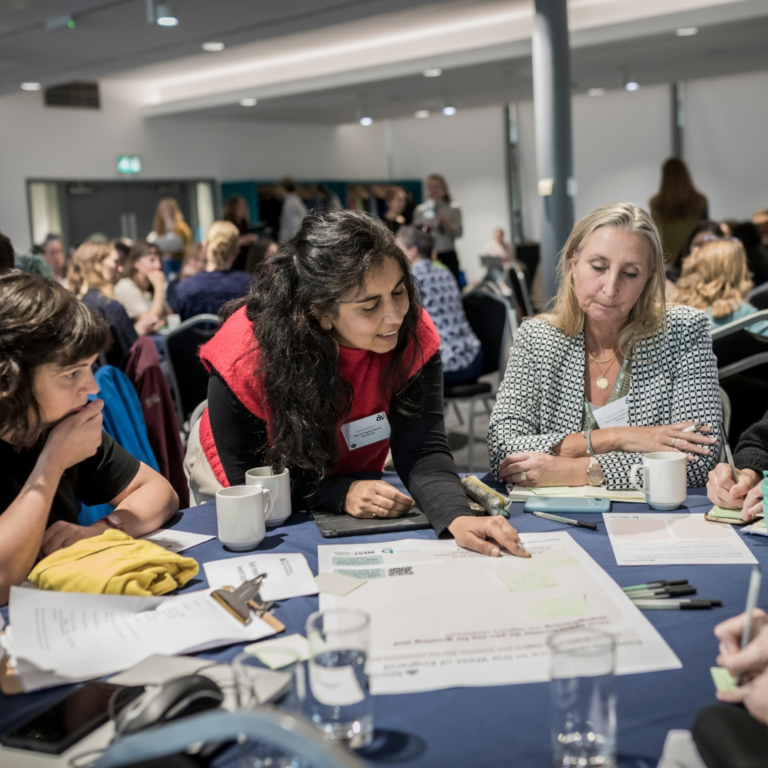
On 6 October 2026 our Gathering, ‘Weathering it Together; climate resilience in the West of England’, brought together representatives of communities, businesses, and the public sector to explore how we can increase our region’s resilience to climate change, as a collective. The large-scale, half-day event was sponsored by the West of England Combined Authority and Bristol Water, and hosted by We the Curious. We have produced a summary of the insights and perspectives shared during the event.
Resilience touches upon many different issues including food, energy, nature, health, water availability and national security. The Gathering aimed to open the conversation and explore the opportunity for a collective approach on climate resilience. The intention was also to emphasise the need for this work to sit alongside, not instead of, action to reduce carbon emissions and restore nature, which will prevent more severe impacts in the future.
Attendees heard about how, in the West of England and beyond, our climate is changing. From heatwaves and floods to disrupted supply chains and infrastructure, the impacts of climate change on all our lives are already being felt and are likely to intensify. Speakers shared a range of perspectives to illustrate how climate change is already shaping our lives and will continue to shape our future.
During the Gathering we also invited attendees to share opportunities, ideas and tangible actions to grow and strengthen our region’s climate resilience. Work to increase resilience will bring additional benefits to people, business and nature. The solutions that emerged reflected a common emphasis on the need to balance community action, physical adaptation, and systems-level change across the West of England.
The most popular, shared themes emerging from the workshops were:
Community networks, hubs and local organising
Attendees frequently highlighted the importance of local relationships, existing community organisations, trusted spaces, and neighbourhood-level leadership. They see social infrastructure as equally important as physical infrastructure.
Better communications, storytelling and public engagement
Many attendees felt the adaptation and resilience conversation is still too abstract, technical, and distant, meanwhile climate resilience depends on useful information travelling through spaces and networks that people already use and trust. There is appetite for a regional resilience communications campaign that feels practical, hopeful, and locally relevant.
Cool spaces and heat adaptation
Heatwaves have shifted resilience from a future issue to a current need. We should be looking for short-term opportunities to build resilience alongside longer-term upgrades to infrastructure. Climate resilience should be incorporated into all new infrastructure.
Schools as critical community infrastructure
Schools can provide a safer environment for children during extreme temperatures, provided they are adapted. To date they have been overlooked as a critical component of climate resilience. Ensuring they can stay open also minimises disruption for other workplaces including emergency services.
Nature-based solutions and urban greening
There was strong support for working with nature and exploring nature-based solutions as first choice rather than relying solely on engineered solutions. Conversations also highlighted that greening is currently concentrated in advantaged areas, and in any case, this can lack aftercare. For example, failures to maintain trees after planting can result in them dying. Nature-based solutions and urban greening should be accompanied by long-term stewardship and maintenance.
Food security and local growing
The food system will continue to be heavily affected by climate change – and is a system in which agency is very dispersed. Ideas were shared about food banks, community farms, allotments, community gardens, and simply the joy of eating together. Food is one of the most accessible ways to engage communities in resilience conversations – as it connects immediate need, affordability, health, community, land and nature, local supply, skills, and resilience to disruption.
Cross-sector collaboration
Conversations at every table reflected that everyone needed to be involved in growing and strengthening resilience, and importantly, that no one is left behind. It is critical for those with lived experience of climate change and those most at risk, to be included and represented in decision making. Attendees believe many solutions already exist, but they are fragmented and insufficiently connected or inclusive.
The role of governance
Attendees identified the need for an approach combining regional leadership with local ownership, avoiding either purely bottom-up or purely top-down solutions.
There is a clear opportunity for climate resilience in the West of England to increase through investment in trusted local networks, community cohesion, cool spaces, schools, and nature-based solutions, and supported by regional leadership and practical public engagement.
The need to come together as a region on climate resilience is clear. The Gathering demonstrated that there is strong local appetite and potential to build a collaborative, regional approach. We are seeking opportunities to continue to support this work. If you are interested in working with us, we’d love to hear from you.
Share to