Spotlight on: Staying well in climate work
If you or your colleagues are overwhelmed, exhausted and suffering from climate anxiety, it’s harder to do the work required towards a better, greener, fairer future. In this spotlight on article, Regenerative Leadership Advisor Jessica Ferrow, explores how to build personal resilience and reduce the risk of burnout by paying attention to nature’s cycles.
Burnout is what happens when we over-extract energy from our own bodies. Those of us working in the climate sector are trying to move away from the extractive systems that led us to the climate and nature crises, so it’s deeply ironic that many of us aren’t applying the same care to ourselves.
Thankfully, we can look to nature for the solutions. Every year, the earth goes through a regenerative cycle of seasons:
- Spring: A time of emergence, growth, new shoots, vitality, new beginning, blooming.
- Summer: The peak of abundance, producing fruits, visible and tangible outputs
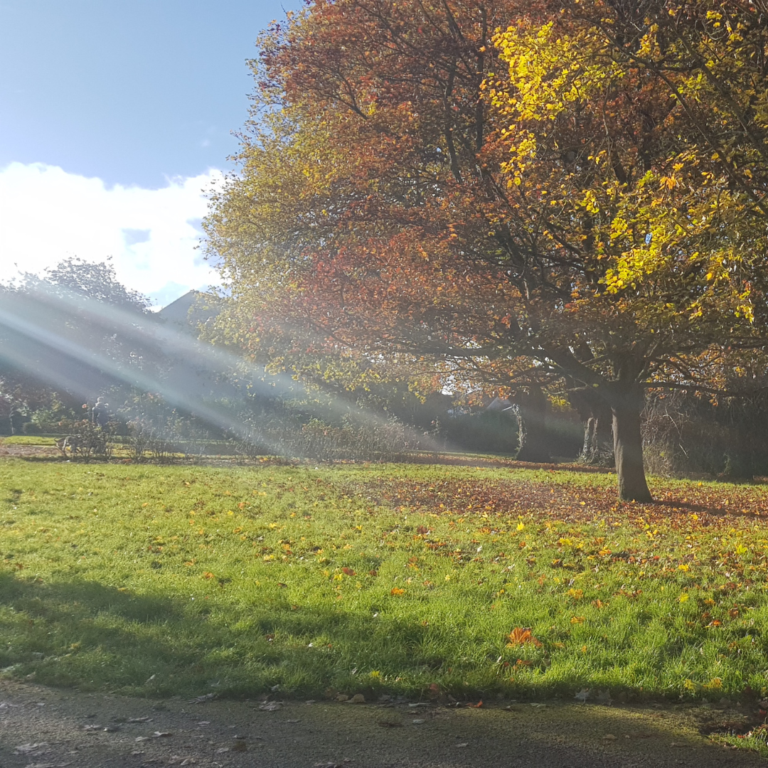
- Autumn: Fruits and seeds drop off trees; leaves fall and compost which will nourish next season’s growth. This dying back is essential.
- Winter: Everything is bare, animals are resting, seeds are lying dormant in the soil.
The seasons follow an archetypal cycle that can be found everywhere in nature. This pattern of growth into fullness and dying back into emptiness can be observed in the sun’s daily cycle, the plant life cycle, the menstrual cycle, even the human life cycle. This is how nature regenerates itself. And it keeps going!
All parts of the cycle are important
In modern culture today, we’re behaving like it is always summer. We applaud businesses for endless growth and output, forgetting that the other parts of the cycle are deeply necessary for the ‘summer’ to happen. We act as though our bodies are machines with endless resources to exploit, forgetting that we are deeply entwined in and affected by these natural cycles. We’re focused on being productive, and we’re not so good at resting, slowing down or embracing reflection and stillness. We tend to feel uncomfortable around the topics of death and endings, which are normally associated with negative feelings.
But if we ignore these regenerative cycles, burnout is inevitable as we are trying to override nature.
So when you hear people use the word ‘regenerative’, this is what it really means. Working with the forces of nature to replenish and renew, in the way nature has done for millions of years.
The great thing is, you can apply these patterns to your work or to your life. By acknowledging these archetypal energies, you can notice where you are overextending and build resilience to the challenges of life.
Applying the cycle to your work
You can apply the seasonal principles to the full timeline of a project, or simply over the course of a day, week or year. Think about what this point in the cycle is best suited for in an energetic sense. The cycle always goes in this order, but it’s not linear, meaning there’s not a specific start or end point, it’s a cycle that keeps going around.
- Spring: Growth. Starting new things. Prototyping. Saying ‘what if?’ Experimenting.
- Summer: Execution, visibility, delivery. Producing fruits. Productivity and output is valued and rewarded.
- Autumn: Harvesting. Finishing things. Gathering and celebrating, reflecting on the wins and losses. Lettings things go and composting.
- Winter: Working on strategy, visioning, dreaming. Pruning. Thinking without actively producing.
Take some time to reflect and think about:
- When you’re doing climate work, where are you repeating damaging extractive patterns?
- Where is ‘constant summer’ showing up in your work? Which other parts of the cycle do you need to pay more attention to?
- How might you introduce even a small amount of this thinking into the way you work or live? Can you make a commitment to that for the coming week or month?
Applying the cycle to your life
If you want to get started working with these cycles, observing The Wheel of the Year is a good way in. These are eight seasonal Celtic festivals that mirror nature’s cycle of life, and which people living in the British Isles have celebrated for thousands of years. For example, Beltane on 1 May heralds the arrival of summer. It’s a time of energy, vitality and rapid growth. Samhain on 31 October to 1 November represents the transition to the ‘darker half’ of the year. It’s a time to honour ancestors and reflect on the themes of death and endings. These festivals happen every six weeks and provide regular points to celebrate and mark the ever-changing seasons.
Think about:
- What are some small ways you can bring more seasonal connection into your day-to-day life?
- Is there someone you can share accountability with for example by making a regular commitment to go outside?
- What is your least favourite season? Could you find joy in it by connecting with one of the seasonal festivals like the solstices or equinoxes?
Jessica Ferrow works is a Regenerative Leadership Advisor. For the last decade, she has advised founder-led brands on B Corp strategy, governance and sustainable growth — supporting organisations to scale without losing their integrity. After having her own experience with burnout and overwork, she now also facilitates programmes and gatherings that reconnect people with nature and nature’s cycles as well as offering 1:1 coaching and mentoring. Connect with Jessica on LinkedIn and learn more about how she can support you and your work.
Share to