Climate Action Programme Case Study: Arnolfini
In this case study Jack Friswell, Technical and Sustainability Manager at Arnolfini, outlines the organisation’s decarbonisation journey and its unique role in inspiring city-wide climate action as a community hub for creativity and learning.
Arnolfini is Bristol’s International Centre for Contemporary arts. With their ambitious net zero climate targets and dedication to building a zero-carbon Bristol, we are thrilled to welcome them as a member of Bristol’s Climate Leaders Group.
Leadership support and team upskilling
Arnolfini has committed to achieving net zero in scope 1 and 2 and reducing scope 3 emissions by 50% by 2030. A big part of making this target a reality is our partnership with UWE, who own and manage the buildings’ facilities. Arnolfini works closely with them on the buildings’ decarbonisation plans, and their ambitious targets give us the freedom to advocate for change.
Our work is guided by our cross-departmental green team. This team has been integral in ensuring sustainability is represented across the organisation, strengthening our carbon reporting processes and embedding it within all decision-making processes.
In the last couple of years my role has evolved to take responsibility for our sustainability and decarbonisation strategy. To help drive our long-term environmental goals, Arnolfini are supporting my postgraduate studies in sustainability at Cranfield University. Upskilling internally enables us to better tailor and understand climate solutions that are feasible in an active art centre.
The invaluable support from leadership and UWE’s sustainability team is core to Arnolfini’s ambition of incorporating sustainability into our day-to-day decisions, with everyone within the organisation feeling empowered to take their own actions.
Reducing Arnolfini’s emissions
Aided by the support of UWE’s facilities team, we have made significant progress in improving the environmental performance of our building. We have:
- Reduced scopes 1 and 2 emissions, taking measures such as using 100% renewable energy tariffs, reducing winter heating temperatures and making LED lighting upgrades in our galleries. Simple switches such as this have already resulted in energy savings.
- Identified that our heating and cooling infrastructure has the biggest impact on scopes 1 and 2.
- Utilised grants from Bristol City Leap to support our building decarbonisation ambitions. These grants are being used to ensure our ventilation system is running efficiently through improving data collection, helping to provide better climate conditions for the galleries, as well as supporting our teams’ engagement with climate action.
Alongside building improvements, we are focusing on limiting the impact of exhibition production, looking at the transport of the art and the materials used, expanding our environmental lens beyond carbon emissions. We review every stage of the process to reduce impact, asking:
- Can we reuse past exhibition materials?
- What is the environmental impact of using new materials?
- Is there a robust end of life plan in place for materials that can’t be repurposed?
Exhibition transport is becoming a key issue, with increasing pressure to use sea freight for international shipping which can reduce carbon emissions by up to 96% over air freight. Clear communication with artists and shippers is essential, as sea freight requires longer lead times which can affect schedules. At Arnolfini, we are aiming, where possible, by 2028 for transport via road or sea for all international exhibitions.
One approach we have taken is to collaborate with other venues on touring exhibitions to share the carbon footprint. Arnolfini recently applied this model with Dana Awartani’s work before its presentation in Eastbourne. This approach ensures the carbon impact of transport is spread over multiple venues and broadens exposure for international artists.
Role in public education
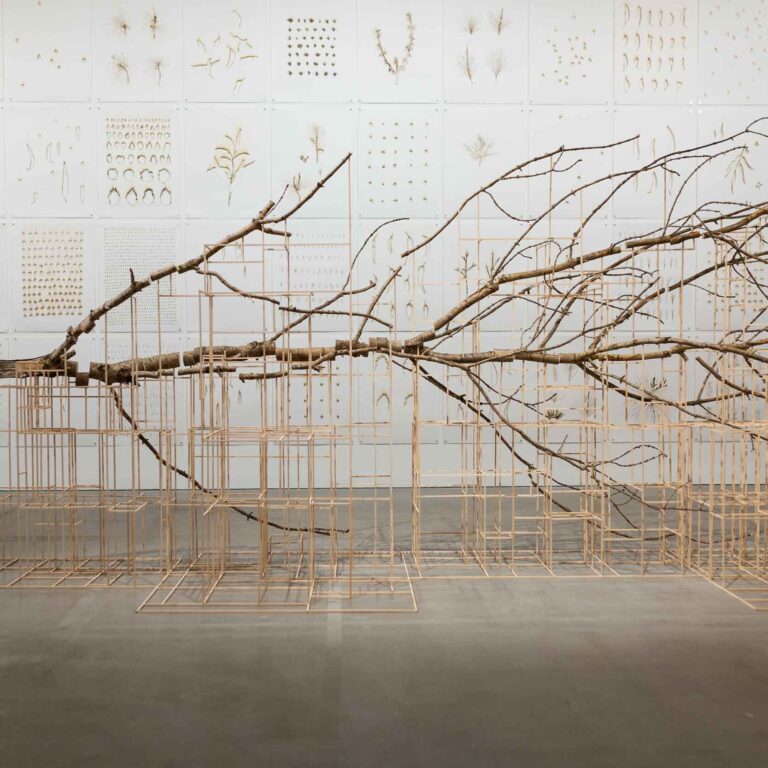
We are using the skills and knowledge of our teams to increase the climate literacy of Arnolfini visitors, utilising our creative platforms to educate and empower audiences to act. Arnolfini has a long history of promoting nature themed work from being involved in setting up the Forest of Dean Sculpture Trail in the 1980’s to more recent exhibitions including Forest: Wake this Ground. With one of our core programming strands being materiality, we use that as an opportunity to connect to sustainability, exploring materials, people and the connection with natural systems.
Our engagement programme workshops often reflect the themes of our exhibitions. Increasingly, part of the engagement team’s focus has been on how they can educate and inspire visitors with environmental action, with a series of climate and nature themed workshops. This work helps carry these climate conversations beyond Arnolfini and into visitors’ homes and everyday lives.
Why has Arnolfini decided to become a Climate Leader?
Networks have been really important throughout our climate action journey – being a member of the Climate Gallery Coalition Network has helped us understand the challenges of the sector through peer-to-peer learning and keeps us accountable, as one network requirement is emission and target reporting. Joining the Climate Leaders Group enables us to be part of a network that is both local and cross sectoral, where we are all working towards the same city-wide goal.
Top tips:
- Take a whole building approach, understand how the spaces are used and what infrastructure you already have – don’t underestimate the low-cost changes that have a big impact.
- Get to know your facilities team, they have the most knowledge on practical decisions that will make a big impact.
- Understanding and correctly communicating data is key. Transform data so it tells a story that other teams can easily understand. Allow the data to guide where your organisation needs to prioritise actions.
- Ensure you take a broader lens when considering the environmental impact of a project – e.g. review its longevity, materials and renewability.
- Make climate action part of your organisation’s core values, ensuring to embed it within all decision-making processes.
- If you are an organisation that owns or manages the spaces of other organisations, share knowledge and provide support where possible to facilitate their decarbonisation journey.
Through our Climate Action Programme collaboration with the Bristol Business Improvement District, we’re keen to showcase climate progress and create more opportunities for businesses to learn from one another.
If you have an initiative or project we can shout about, please do get in touch with jasmine@bristolclimatenature.org
Share to