Shining a light on the links between climate and migration
Many people will be forced to leave their homes as climate impacts worsen, and move to more urban areas. Our work brings people together from different communities across our city and we want to Bristol to feel welcoming and local climate action to be inclusive. At our recent Green Mingle we heard from Adele Owens from Bristol City of Sanctuary and Robert Pope from ACH on their work to support refugees and migrants to feel welcome in the UK and learn from their already low carbon lifestyles.
As Bristol Refugee Festival gets underway, Caroline Twigg from the Mayors Migration Council (MMC) discusses the links between climate change and migration in this blog.
The global perspective
In 2021, the World Bank’s Groundswell report estimated that up to 216 million people could migrate within their own countries by 2050 due to the climate crisis. These would be internal migrants, people displaced within their own national borders – the number of people crossing international borders due to climate is a separate (and harder to measure) question. But it shone a light on climate migration, increasingly recognized not just as a humanitarian issue but as a security, economic, and development one.
With up to 78% of refugees and internally displaced persons already living in urban areas, and climate impacts such as droughts, floods, rising seas, and extreme weather driving people from rural areas, cities around the world are responding to this daily. Many are finding that integrating inclusive policies with climate action can expand services, meet infrastructure needs, and create economic opportunities for all residents, long-established or newly-arrived.
Bristol was a founding member of the C40-MMC Task Force on Climate and Migration in 2021, which launched with detailed analysis of The Role of Cities at the Climate-Migration Nexus. Ahead of COP29, the Task Force and the Climate Justice Fund released a first-of-its-kind report on urban loss and damage including Future Urban Landscapes, which projects that up to 10 million people could migrate into just 10 global cities by 2050 if Paris Agreement targets are missed. More recently, work on Good Green Jobs and Labour Migration documents over 30 city-led initiatives showing that supporting both local workers and migrants can close green jobs gaps.
Why is it relevant to Bristol?
- Bristol is a City of Sanctuary and has been for over a decade, guided by its Sanctuary strategy and action plan.
- Both Bristol universities hold University of Sanctuary status; UWE hosts the movement’s national conference later this year.
- The West of England is facing many challenges from the impacts of climate change, including an increased risk of coastal flooding, river and surface water flooding which will affect inner-city areas, coastal communities and more rural villages in different ways. The regional authority outlines the impacts along with some of the actions that can be taken.
- Some of Bristol’s twin cities are directly affected by climate migration. Beira in Mozambique, twinned with Bristol since 1990, is a low-lying coastal city where rural displacement from climate shocks has driven rapid urbanisation. Around two-thirds of the city now live in informal settlements, many of which are in flood-prone zones. Working with partners including Bristol Link with Beira and Bloomberg Philanthropies, Beira has built nature-based flood defences, including a 44-hectare green park designed to absorb floodwaters and protect tens of thousands of residents.
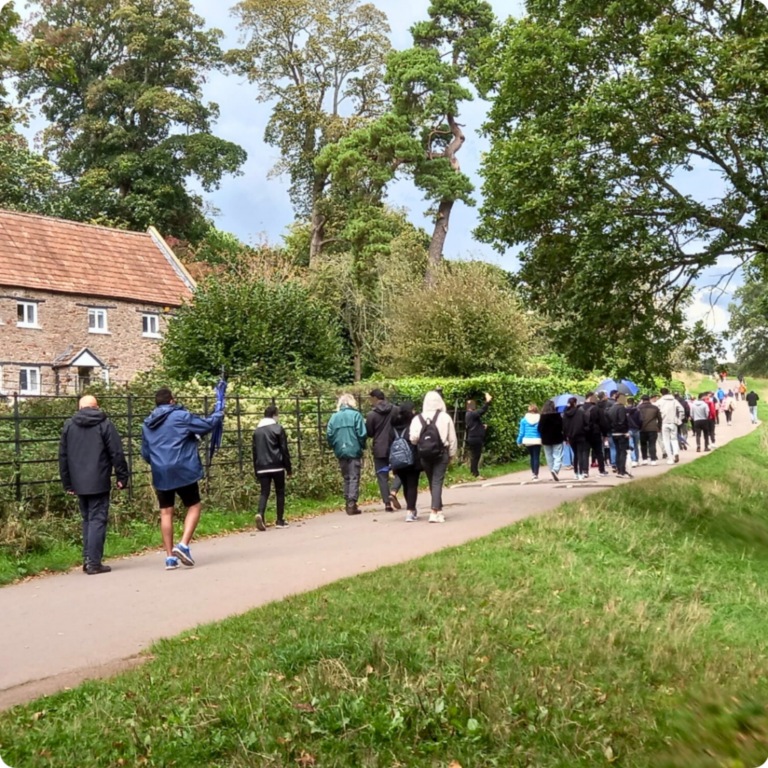
- Bristol is home to organisations already working at the climate-migration nexus. Bridges for Communities’ Walk With Me programme connects refugees and asylum seekers into local communities including through shared time in nature. Ashley Community Housing (ACH) created Green Skills for Employment, training refugees and migrants for green jobs and the skills needed to access them, alongside a Green Growth Accelerator Programme for refugee and migrant-led businesses. ACH also led an in-depth community engagement process with refugees and migrants in Bristol through the Community Climate & Nature Action Project, producing a community climate action plan and highlighting that this group, often excluded from environmental conversations, tends to emit less carbon than the average Bristolian.
To learn more about the work that ACH do, watch this short video
Share to